Home Blog Page 47

Can everyone speak in tongues?

0

What does the bible say about Spiritual Gifts? In particular, Is the gift of ‘speaking in tongues’ for everyone. In this question, we tackle the debate surrounds gifts of the Holy Spirit?

Join the debate online by using the hashtag #ThePulse

Listen on Apple Podcasts or Soundcloud: CLICK HERE

RECENT EPISODES

How should Christians react to Kanye West?

0

In this podcast, our team address the question, How should Christians react to Kanye West. Kanye West is a world-renowned rapper and producer who recently confessed a belief in Jesus Christ. Despite this, controversy surrounds his conversation.

You can join in with the conversation online #ThePulse

Listen on Apple Podcasts or Soundcloud: CLICK HERE

RECENT EPISODES

How should Christians react to Cults?

0

In the episode of The Pulse, we discuss what a Christian response to cults should be. In a time where cults appear to be grabbing headlines, It’s important to be aware of a Christian response.

Listen on Apple Podcasts or Soundcloud: CLICK HERE

RECENT EPISODES

Should Christians Believe the Genesis Account of Creation?

0

Welcome to the Genesis of this podcast. The Pulse Podcast is brought to you by Our God Given Mission. This podcast is your chance to send in questions to the OGGM team who will answer pulse-raising questions, engaging with some of the most difficult questions Christians face.

In this episode, we consider whether Christians should believe the Genesis account of creation.

Listen on Apple Podcasts or Soundcloud: CLICK HERE

RECENT EPISODES

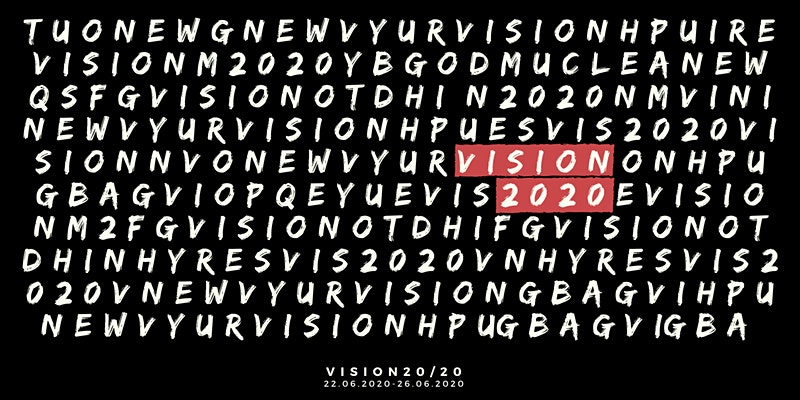
VISION2020 – POSTPONED

DUE TO COVID-19, VISION 2020 HAS NOW BEEN POSTPONED TO JUNE 2021

#Vision2020 is set to be OGGM’s fourth annual retreat and like all of our previous retreats, Vision 2020 is designed with students, young adults, and professionals in mind. Over 5 days, 200 people will gather to ask the question, what would happen if we could see how God sees. If we could see our strengths, struggles, blessings, jobs, gifts how God sees them. How would your life change?

Why does ‘Vision’ matter?

Perspective matters. The way we view things, and the lens in which we do so matters. Our vision, perspective, and lens are all integral in our decisions and determine how we live our lives. This is what we find all throughout scripture, that perspective is often far more important than reality. The prophet Jeremiah exclaims “you foolish and senseless people, who have eyes but do not see, who have ears but do not hear:” (Jerimiah 5:21. The Psalmist David would tarry in prayer that God would “open my eyes to see the wonderful truths in your law” (Ps. 119:18). In Ephesians 1:18, Paul instructs us to see with the eyes of our hearts. Proverb reads that without vision, or revelation, the people perish (Prov. 29:18). Vision of immense importance to God.

Vision isn’t simply what we see, but it is also the way in which we see. In other words, Vision is the lens in which we interpret everything which surrounds us. The problem is, our vision has been distorted. One of the fundamental differences between the believer and the unbeliever is revealed by the way in which we interpret the events which happen around us. The unbeliever uses the lens ‘self’ and interprets events through the standards of the world. The call of the gospel is for the unbeliever to receive a new sight, to see how God sees, to see with His perspective. This is what we witness with Pauls’s radical encounter with God on the road to Damascus. Coupled with a new name, he was also given new sight. Saul was struck blind on the Damascus road as a demonstration of his need to see things in a new way. For the first time in his life, Paul began to see how God sees!

This is the heart behind Vision 2020. The week is going to be focused on how can we gain a kingdom perspective. During a time where everything around us is vying for our attention, where we are all managing our various pursuits, passions, and interests, the question that remains is; Are we seeing as God sees? Are we willing to lay aside our preconceptions in order to adopt the mindset of God? At #Vision2020 we will seek to answer the following question; how do we humble ourselves enough to see as God sees and as a result, love the world as He intended for us to love it?

When is #Vision2020?

The retreat will take place from Monday 22nd June 2020 to Friday 26th June 2020.

Click Here to Get Your Tickers Here!

No Fixed Abode: Quitting Home Ownership

0

A little over a year ago, I quit my job, sold my home and gave away 99% of my possessions so that I could travel the world. It was the most exciting thing I’ve ever done.

To me, quitting a great job was very scary (No more income! A large gap in my employment history! Burning bridges right, left & centre! Throwing away a fabulous career!) but I’ve come to realise that for most people, that isn’t the scary part. The thing that everyone asks about — the part that they can’t quite get their heads around — is that I don’t have anywhere to live.

Then his spiel took a turn to a personal testimony of his experience with IF. He’d burnt more fat than he previously could with any other diet. He felt happier, healthier and more energetic. He’d streamlined his morning routine and was saving money by no longer buying late-night snacks. All because he didn’t eat for 16 hours of the day.

Sitting there, I felt like I was given one of those ‘too good to be true’ offers than lead to you joining a cult. I was sceptical. It sounded great and all that, but I’m a breakfast guy. Besides, it sounds like a fad diet that I wouldn’t be able to maintain. I’d drop some weight while doing it, then I’d put it back on when I realised I couldn’t maintain it.

The Journey Begins

A month later, I conceded that I might as well give it a go. Over the past few years, I had been carrying a few extra kilograms that I had tried to drop. For the six months prior, I had been going to the gym regularly to try and burn it off. In those six months, I had shifted the scales slightly, but not enough considering the work I was putting in. Intermittent fasting became a very tempting option. I thought I’d give it a go.

I spent a lot of time researching the 16:8 approach to fasting. Honestly, there are a lot of mixed things out there, with a lot of evidence supporting it’s proclaimed benefits, while others are not as sold on it. The overarching point I found was to give it a go and see if it works for you.

The first couple of weeks were tough. My body was so conditioned to eat at certain times and I had to fight hard to resist. This was one of the big learning experiences for me. I had to remind myself that I don’t need to eat right now and that it was my body responding to a change in routine. I decided to be as strict as possible in the first month, knowing that it takes about 4–5 weeks to establish a new routine, and it worked.

The Unexpected Benefit of Writing Letters to My Kids Every Month

0

I started writing letters to my kids once a month when they were born.

My boys are now 16 and 14, so they have 192 and 168 letters respectively. I’m not done yet, either: I promised to continue writing to them until they turn 18.

I won’t lie and tell you I started these letters for altruistic reasons. I had selfish goals: Because I left a successful career to raise my boys full-time, I planned to provide a kick-ass chronological history of our time together so I could justify my stay-at-home-mom status.

I figured that if I documented everything I did with them and for them from birth to age 18, they would remember me as the greatest mother that ever lived in the history of the universe.

I wrote about how I pumped breast milk for a solid six months. Best mom ever! I wrote about how my son started talking in full sentences at age two because I read books and sang songs to him every night to help develop early language skills. Mother of the year!

But a devastating thing happened on the way to me documenting my star-mom status: Their dad died.

I couldn’t possibly know, when I began my letter-writing campaign, that my selfish goal would turn into a benevolent one. My monthly letters evolved into a memorial for a story we never expected to end so soon.

Now, whenever memories fade and the boys need a reminder of their father’s love and devotion, they read the letters.

It’s all right there in black and white.

You can read the moment we enter the teenage-angst phase because my letters have less of an “I’m so lucky to be your mom!” tone and more of a “please, Jesus, just help me get through the day” tone.

I didn’t sugarcoat our struggles, but I didn’t display them in their entirety either.

During one rebellious and unmanageable year of my older son’s adolescence, I wrote nothing at all. I had nothing positive to say. It was all too much to handle as a solo parent. Plus, I didn’t want my rage bleeding all over the page. It would be too easy for me to criticize my son’s abysmal choices and for him to base his worth on bad decisions made in a blip on the radar screen of his youth.

It’s also hard to write about good times when eye rolls, grunts, and general unpleasantness littered our days. But, that’s part of being a parent. So I rekindled my writing by summarizing the next year instead of documenting every cruel, harsh, and bitter disagreement. I didn’t sugarcoat our struggles, but I didn’t display them in their entirety either.


I promised my husband that I would do my best to keep his memory alive. I’m so thankful the letters serve two purposes: One is to help my sons remember their dad. The second is to remember how we made it through.

But, as I got caught up in all of my husband’s remembering, I’m not sure I conveyed how much of my heart and soul I put into these boys, too.

Moving forward after my husband’s death was no small feat. Grief is a bitch and I experienced the boys’ anger in all its manifestations. Maybe they’ll continue blaming me for maternal wrongdoings without understanding how hard it was to pick up the pieces as a young widow and only parent. Maybe they won’t. Only time will tell.

I tried my best to write about the realities of living with death and grief and sorrow. I didn’t pretend we weren’t hurting but I didn’t dwell in victimization either. I hope I’ve communicated, after heartbreak and healing, how much I love being their mom.

Whenever memories fade and the boys need a reminder of my love and devotion, they can read their letters.

It’s all right there in black and white.

The Vacation I Became a Parent to My Father

0

In Hawaii, I walked around in white pedal pushers, carrying a large, white straw purse, (even larger than my mom’s) thinking that all the boys would surely notice me. Well, if they did it wasn’t as anything but a flat-chested twelve- year-old carrying a purse way too big for her and smiling like a complete dork.

In New York, I was a bit more sophisticated. Sort of. I actually fell in love and had my heart broken all in one night. This incident caused my father to go into a rage and want to go kill whoever had made his baby girl cry so horribly. (The closest I got to a Baby moment.)

When he found out I was sobbing hysterically because I would never see that boy again, he wanted to kill me!

But no matter what age I was when we traveled, I knew my father would get us to our destination safely. He would take care of everything (hotels, car rentals, food, souvenirs, fun) while we were on our vacation. And see to it that we arrived home in one piece.

Now, that’s not to say that I didn’t lose my patience a bit. Especially when my father was asking for a cocktail only a few minutes after we had taken our seats on the plane. But then I couldn’t blame him.

The first-class passengers were drinking wine and eating hors d’oeuvres, while the coach passengers were still boarding. The combined age of those first-class passengers was probably only a few years past that of my dad’s.

We arrived safely in Mexico and as I had promised my father, there was a wheelchair waiting to take us through customs. And as I had also promised there were beautiful sunrises (well, I guess I didn’t have much say in that event) and delicious huevos rancheros (again not something I prepared) and many wonderful hours playing cards, drinking margaritas and laughing.

can take credit for some of those.

Upon returning home safely, my father grasped my hands, looked me in the eye and said, “Thank you so much. We made it home safe and sound, didn’t we?”

“Yes, we did,” I said. “But you don’t have to thank me.”

To be honest, it was difficult at times. Traveling with elderly parents presents many obstacles.

But the truth is, now that my father is gone, I wish I could do it all over again.

How To Love Yourself, Even When No One Else Seems To

0

ear Thin Friend, we’ve been planning this trip for months, and the day is finally here. I’m so excited to be embarking on this adventure with you. It fills me with joy to be traveling with you to far-off lands to experience new cultures and reach a level of relaxation neither of us has felt for months. The prospect of getting out of our comfort zones makes my soul tingle, as does jumping headfirst into new and exciting territory with you. I just want a cocktail in my hand and you by my side and I will be a happy person.

Before we embark on this journey together, though, I think we need to chat.

You’ve never lived in a body like mine. Your view of the world and of experiences like traveling are viewed through the rose-colored glasses of thin privilege. For this I do not blame you, but I know from living in a bigger body my entire life that there are things we need to consider when traveling: things that might not have occurred to you. I hope that after reading this you will go on our vacation with freshly opened eyes and a newfound respect for what it’s like to be a fat traveler.

My dearest Thin Friend, I know that you are so excited about your new vacation wardrobe. It’s full of colorful matching sets, new bikinis, and dresses that show off your body. My suitcase is full of colors and crop tops, mesh skirts, and bikinis, too, but they won’t fit you. Nor will your wardrobe fit me. So let’s not engage in the charade of optioning each other’s clothes, and please don’t make me try to squeeze into your wardrobe. I am just as fierce as you, but there is no way my curves and swerves are fitting into that dress and that’s okay.

We haven’t traveled together before, so I want to let you know something — people stare at me, but that’s not always a bad thing. Some of them will stop and ask to have their photos taken with me. People will call out “Yas, queen!” as we are walking down the street. Society isn’t used to seeing fat people confidently owning their space, let alone fat people with a wardrobe like mine. I’m okay with the staring; I like to talk to people, and I don’t mind having my picture taken, either. I love you, but you don’t need to defend me. I’ve got this. I have been defending my life and body for as long as I’ve been alive. I do welcome your support and I love that you care about my wellbeing, but haters gon’ hate, and I can deal with that. Watch me.

Traveling together is going to be great. After two weeks of adventures and new experiences we will learn new things about each other, explore our differences and similarities, and come away with memories that will last a lifetime. I hope that spending time with me in my bigger body gives you a new appreciation for your own body and respect for me in mine, because I can do everything you can do — and I can drink you under the table.

So get on the plane and let the adventures begin!

You are NOT worth dying for

We know that God cares for us. We know that He gave His life for us. However, the message “God thinks you are WORTH dying for” is one which although is heartfelt, passionate and sincere is unfortunately false and ultimately antithetical to the true teachings of the Gospel. It is a message which I see plastered all over Christian social media, Christian music, and Christian sermons. I believe it is a message which is said with good intentions and is one which for the most part is sincere. However, it is sincerely wrong. At first glance, it is a seemingly harmless message but is one which is rooted in flawed theology. This has significant ramifications as to how we view and relate God and how to view the Gospel message. The Gospel is not about our own worth but rather Jesus’s supreme worth.

In an already self-centered world, this message gives further ammunition to our cultural outlook. We are far too “me” centric. It is all about what worth we can give to someone else. Our social relationships are founded on the premise of what we can provide to the other party. As is a result of this, we tend to take this premise into our relationship with God. We think that He loves us and died for us because we must have some worth to offer to Him. This is far from the truth. I understand the sentiment behind the message, I am not writing this article to say that we have no worth or that God doesn’t value you. In fact, as Children of God, we have infinite worth! However, what I am hoping to explain is that we did not have [special] worth,[ in a salvific sense], prior to Christ’s death on the cross. What I will be pointing out in this, is what should be obvious: it wasn’t our preexisting worth (prior to the cross) that prompted God to forsake heaven and die on a cross. Indeed cross was about worth, just not ours.

Theology matters

Theology matters. Our knowledge of God matters. The way we view God matters. The way we present the Gospel matters. We waste much of our lives gathering knowledge about unimportant things. When it comes to our favorite sports teams, we are glued to our screens to ensure we have up to date information regarding them. When it comes to our favourite celebrities we are so engrossed in the knowledge surrounding their daily lives. BUT, when it comes to trying to understand a perfectly Holy, infinite and marvelous God, we are lazy and sloppy. How we work our knowledge of God tells us how much, or how little, we love him.

I can imagine a lot of responses I’ll get to this article would be something along the lines of “it’s not that deep bro”. On the surface level, the statement seems pretty harmless, right? So what is the big fuss? The fuss is that it’s not a harmless statement. We shouldn’t simply brush it under the rug, instead, we should snuff out as soon as we can. It is simple, minor errors in our theology like this, which have significant impacts in the long run as to how we view God. The issue with the idea that “you are worth dying for” be it explicitly or not, the statement stems from the belief that we somehow add any sort value or worth to God. Quite frankly, it is lazy teaching and is in fact anti-Gospel. The truth is God doesn’t need us (Acts 17:25). He is not somehow deficient and we do not somehow complete Him. God is not needing of someone to love or to be loved by. Rather He exists in perfect completeness, in a perfect love relationship within the three persons of the Trinity. I am in complete agreement that God loves us immensely, and that the fact that He sent His son to die for us should blow us away.  The issue I find with the message is the fact Jesus loved us so much, doesn’t really translate to OUR worth. The cross is about HIS worth, not ours.

Affirming the Consequent

‘Affirming the consequent’ describes a situation when someone takes a true statement and invalidly concludes the converse. For example, If a car has no petrol, it won’t run. The car doesn’t run. Therefore there is no petrol. There is a clear and obvious flaw in reasoning here. The conclusion fails to see that there are other things which can have the same symptoms.  We commit this same logical fallacy when we make the assumption that we are valuable because Jesus died for us.  From a logical perspective, there are many other reasons as to why Jesus died on the cross. Let’s examine a few of those below.

Christ died because of His worth it, not ours

There is no fathomable way that a stubborn, rebellious, sinful, flawed, created being is worthy of the infinite, marvelous, perfect, Holy, creator of the universe dying for them.You and I for Jesus is no trade at all! 

Romans 3:12 makes this abundantly clear, “All have turned aside; together they have become worthless; no one does good, not even one.” We were ‘worthless’ in our sin. This is what makes the Gospel, Gospel! This is what makes Grace, Grace! If it was true that we were worth dying for then the Gospel is no longer a Gospel of Grace, instead, Christ’s death simply becomes the Gospel of entitlement. We are simply getting what we deserve. This is far from the truth. The truth is rather that we were enemies of God and deserving of his eternal wrath (Ephesians 2:3). so then why would God substitute Himself for us? The cross is not a display of how worthy or valuable we are. Instead, as John piper famously says, It is a display of “the hopeless, undeserving, dirty, sinful, guilty, rebellious, corrupted condition of the people who were purchased.” We were “unworthy” so we needed someone who was “worthy” to take our place. Christ did not die on that cross because you or I were “worth it”, He died because He was. Only the life of a perfect, holy and blameless lamb of God could satisfy the ransom needed to pay for our infinite debt.

“For by grace you have been saved through faith. And this is not your own doing; it is the gift of God,  not a result of works, so that no one may boast.”  ~ Ephesians 2:8-9

The concept of Grace is one which most of us struggle with; human nature almost demands us to do something, to have some worth or some part to play. I understand the desire and sentiment behind the message, I understand the need to help people see they have value in the eyes of God. However, the message is one which is far too “me” centered. The greatest encouragement you can give someone isn’t God died for you because you are worth it, it is rather that God died for even though you aren’t. Note the difference. The former puts pressure on your performance whilst the latter allows us to rest in God’s performance. The true grasp of Grace is understanding that God loves me regardless of my worth, my past, what I’ve done and what I am yet to do. Regardless of whether I stumble or whether I fail, He loves me still because of how much He is worth. If we approach God as deserving we are not approaching Him by grace through faith. The call of the Gospel is to remove our eyes from ourselves and what we are doing and to instead focus on God and what He has done. Our boasting is in Christ and not ourselves. Through Him, we are adopted (Romans 8:23), we are forgiven (Romans 5:1), we are redeemed, purchased and rescued. All of this is found in HIS worth and His doing, not ours.

Christ died so God can be Glorified, not us

“And the Word became flesh and dwelt among us, and we have seen his glory, glory as of the only Son from the Father, full of grace and truth” (John 1:14)

God purposed for Christ to die so that He may be glorified (John 12:23, 27). This was God’s plan before the very foundations of the earth (Revelations 13:8). As strange as it may sound, the crucifixion of Christ was the greatest display of God’s Glory. Human nature and today’s culture has us exclusively thinking about the cross in relation to our own lives. “Christ died for me” we sing, “Christ died for my salvation” we proclaim. Both of which are true however, they are only mere byproducts. Christ primarily died for God. For a lot of us, this is a new way of thinking about the cross, for most of our lives we were sold a “me” centered Gospel. Jesus Himself knew that His life was to be lived to solely the glory of God and also that His death was to be for the glory of God. He came into the world, He says in John 17:4, to glorify God. In John 7:18, He came seeking the glory and only the glory of the one who sent Him. Everything He did was for God. Even when anticipating the cross, the wrath, and the pain that came with it, Jesus cries out “But for this purpose, I came to this hour. Father, glorify Thy name.” John 12:27.

Jesus went to the cross, not primarily for us (although that was one reason), but primarily to be obedient to the Father.  The Father had the Son killed to glorify Him (Isaiah 53:10-12).  The whole of the bible is about this act of glorification of the Son (John 13:31-32).  Our worth doesn’t play into it. It wasn’t that we were worth so much to God that He chose to die for us. It is that His Son was worth so much to Him that He was willing to sacrifice Him so that He might be highly exalted. This was God’s plan.  We are along for the ride.

God is committed to glorifying himself and He is most glorified in the rescue of sinners. God is the only being for whom to be committed to his own glory isn’t selfish, egotistical or vain, but instead, it is the most loving thing He can do. God’s commitment to his own glory is great news for us because His glory is full of grace and love. Therefore, If He is committed to His glory, because He is so perfectly self-sufficient, the glory of the fullness of His overflows in truth and grace for his creatures. The reason that Christians live for the glory of God is that God lives for the glory of God. All the recorded events in the history of the universe are about God and His glory. We are supporting characters in the play about God. It is the story of God. The cross was the climax, the crescendo of the story. It is where God is most glorified and victorious. We are here to support that.

Christ died to give us worth, not because of it

“There is a big difference between:

I’m worthy, so he died for me.
and
He died for me and gave me my worth.

We “were dead in trespasses and sins” (Ephesians 2:1). Therefore, what worth or value is there is something which is dead? Absolutely zero. However, and here is where the “good news” part of the Gospel comes in, He actually loved us despite our condition (John 3:16), and because He did, we now have inestimable worth. The righteousness of Christ, or “worth” if you like, has now been imputed onto us (2 Corinthians 5:21). This was not because we worked for it, not because we earned it, not because we are worthy of it, but because we were unworthy and unable to make ourselves worthy in any way. Our worth is not the “why” for Jesus dying for us, our unworthiness is.

I know that many people, Christians included, struggle with the idea of feeling “unworthy”. There is an inner witness in our hearts which tells us so. However, the Gospel provides a solution and I believe the more we can show people that their worth is not the issue, the better they will understand it.  For us to truly grasp the Gospel message, we need to see love and grace shown to us in the time where we least deserve it. What we do instead is we try and suppress that truth, the truth that we a radically depraved and in need of a Saviour. We suppress it with cute, heartfelt human words such as the message discussed today, which although may make you feel good at the time, will not help you find everlasting joy. We find joy when we rest in the finished and perfect work of Christ. The most powerful tool the Gospel message gives us is that when we fall short, and the devil whispers in our ear to make us feel unworthy; so we then run away from God. We get to shout in response “you are right, I’m NOT worthy. . . but He is!”, Jesus’s righteousness is mine because He substituted His worth for my lack thereof.

So do we have any worth? Of couse we do. We have worth because God has given it to us.  We are His image-bearers. Furthermore, Psalm 139:13-16 tells us that we are fearfully and wonderfully made. Ephesians 1:13-14 tells us that we are God’s own possession, chosen for the praise of His glory and that we have an inheritance in heaven with Him as His children. However, an important thing to note is that these are not things we have been done or achieved by ourselves. We were either “made” so, “chosen by God”, or it is something we “inherited” and thus, our worth is totally from Him. We are simply recipients, and now we have infinite worth in Him because of the price He paid to make us worthy. That is the good news of the Gospel.